Common DSG Problems
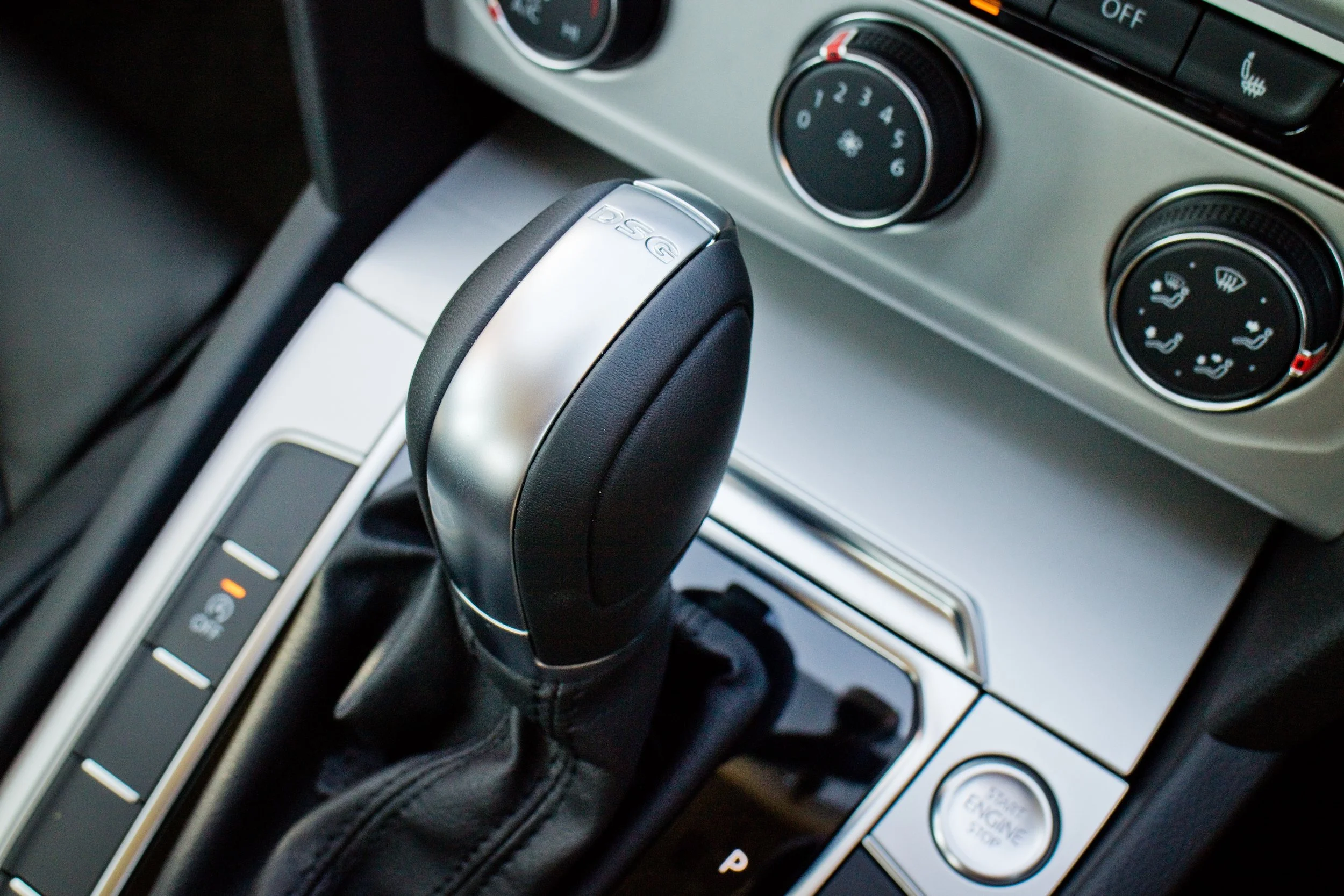
Direct Shift Gearbox (DSG) transmissions — also known as dual-clutch gearboxes — are used in many modern Volkswagen, Audi, Skoda and other European vehicles. They’re designed to deliver lightning-fast gear changes, improved fuel economy and a sporty driving feel.
Unlike a traditional automatic, a DSG uses two internal clutches and a highly advanced control system to pre-select gears. The result is smooth, rapid shifting — when everything is working correctly.
However, like any complex system, DSG gearboxes can develop faults over time. Below are some of the most common DSG problems drivers experience, what they feel like, and what may be happening behind the scenes.
-
You should have your DSG professionally inspected if you notice:
✔ Jerking or shuddering at low speed
✔ Flashing PRNDS lights
✔ Warning messages about gearbox malfunction
✔ Sudden loss of power or gear disengagement
✔ Harsh or delayed gear changesEarly diagnosis can often prevent a minor issue from becoming a major repair.
-
What you feel:
Shuddering when pulling away
Hesitation in slow traffic
A “jump” or “thump” when stopping or starting
What it can mean:
This is one of the most frequent DSG complaints. It’s often related to clutch wear, clutch contamination, or incorrect clutch adaptation. In dry-clutch systems like the 7-speed DQ200, clutch condition is especially critical at low speeds.Sometimes the issue is mechanical. Other times, the gearbox simply needs correct software calibration and adaptation.
-
What you feel:
The car suddenly feels like it has gone into neutral
Revs rise but the vehicle doesn’t accelerate
What it can mean:
Certain DSG units, including the DQ200 and DQ250, have been known to suffer internal electrical faults within the mechatronic unit. In some cases, contamination of transmission fluid or wiring issues can lead to short circuits, causing the gearbox to momentarily disengage drive.This is not something to ignore — it requires prompt diagnosis.
-
What you see:
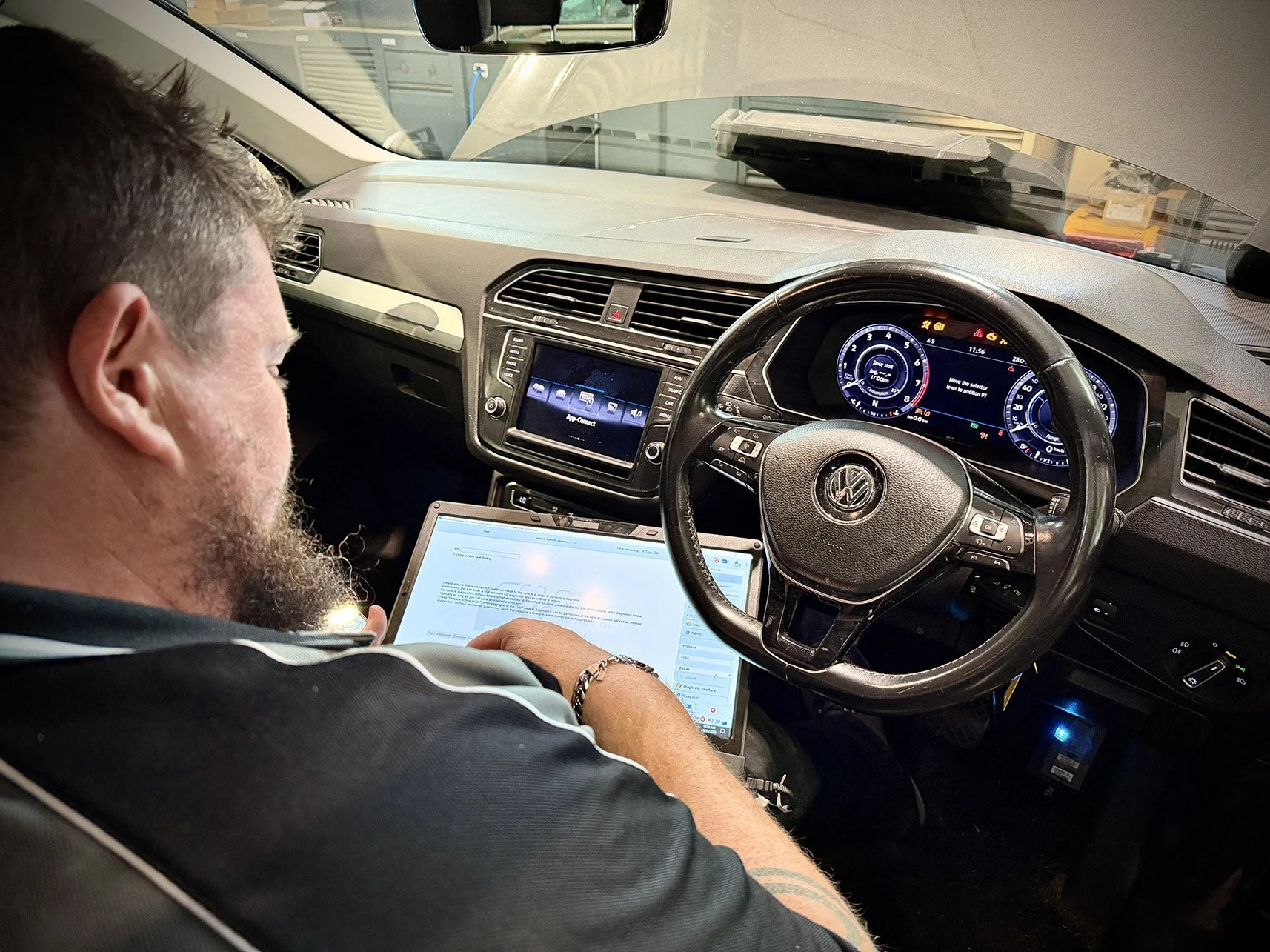
A warning message appears on the dash, sometimes with a flashing PRNDS indicator.What it can mean:
The vehicle’s control system has detected abnormal gearbox behaviour. While the car may still drive, the transmission has likely entered a protective or “limp” mode to prevent further damage.Common related fault codes include:
P17BF – Hydraulic pump system overload protection
06293 – Function restriction due to pressure drop
06300 – Insufficient hydraulic pressure build-up
06079 – Hydraulic pump play protection
These often point toward mechatronic unit pressure issues.
-
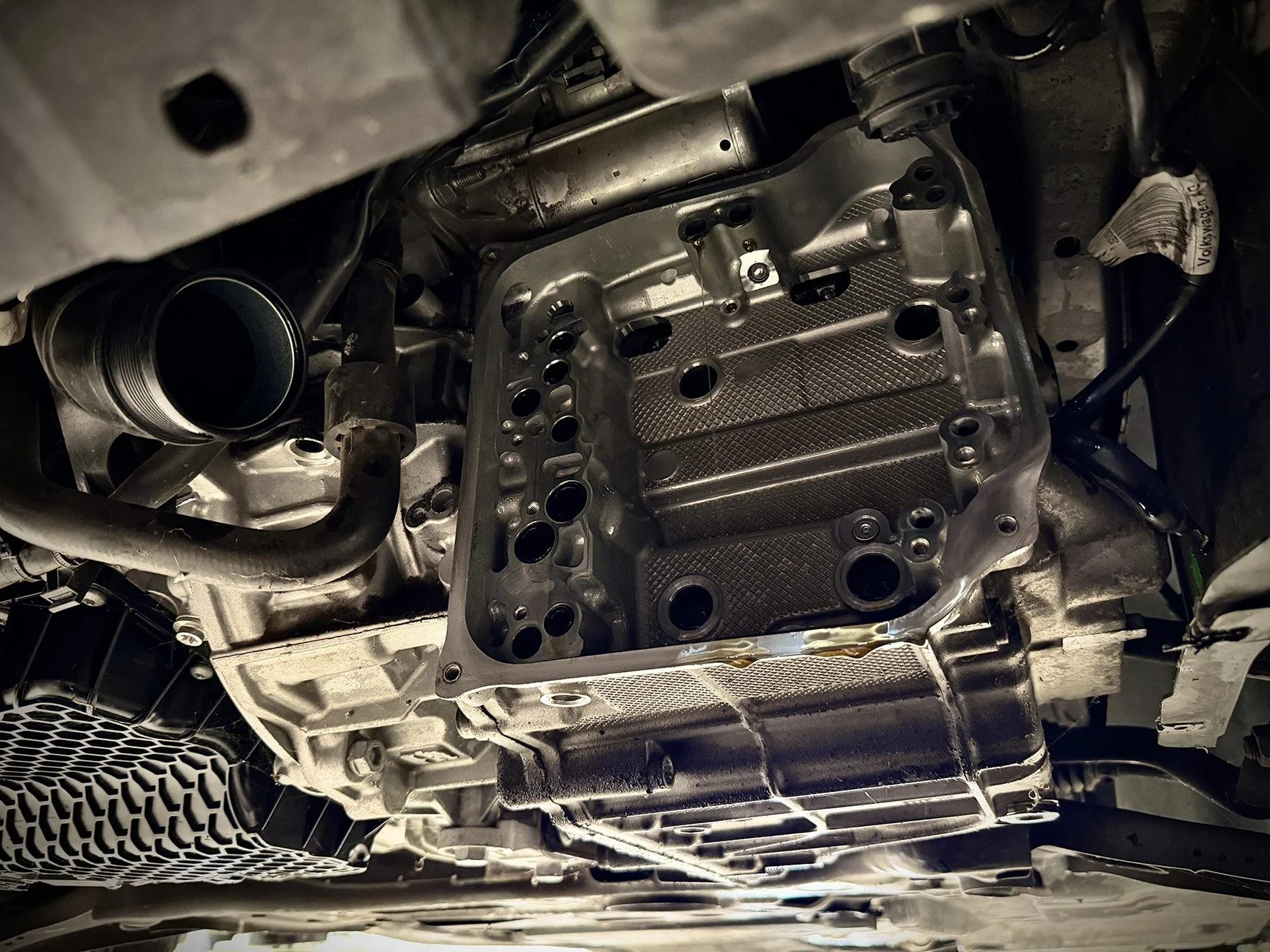
The mechatronic unit is the brain and hydraulic control centre of the DSG transmission. It controls clutch operation, gear selection, and hydraulic pressure.
Symptoms may include:
Harsh or unpredictable shifting
Gear indicator flashing
Stuck in one gear (for example, fault 01851 – Stuck in gear 6)
Sudden loss of drive
Multiple gearbox-related fault codes
Mechatronic failure is one of the most serious DSG faults but is often repairable without replacing the entire gearbox.
-
What you feel:
Vibration when moving off
Shaking through the vehicle at low speed
Rough gear changes between 1st and 2nd
What it can mean:
This is commonly linked to clutch wear or clutch contamination, particularly in dry-clutch DSG systems. Over time, heat and stop-start driving can cause clutch surfaces to degrade.Fault codes like P17CF – Clutch 1 or 2 slippage too high may be stored.
-
After DSG repairs — or even sometimes after battery replacement — the gearbox may require basic settings and clutch adaptation.
If these procedures are not completed correctly, you may notice:
Rough shifting
Delayed engagement
Hesitation
Fault messages
“Adaptation drive not completed” errors
Proper diagnostic equipment and correct procedures are essential for DSG calibration.
The Key Takeaway for Owners
DSG transmissions are highly advanced and deliver an excellent driving experience — but they are also sensitive to wear, fluid condition, electrical faults, and correct software setup.
The good news is that many DSG issues are diagnosable and repairable with the right tools and experience. If your vehicle is showing any of the symptoms above, addressing it early is the best way to protect both performance and reliability.
At Zenith Autohaus, DSG repairs aren’t just another job to us — they’re something we genuinely understand and work with regularly.
Our team has years of hands-on experience with Volkswagen Group vehicles and the specialised tools needed to diagnose, repair and correctly calibrate these complex gearboxes. For drivers in Albury–Wodonga, that means you can have your DSG concerns handled locally by people who truly know these systems and care about getting the result right the first time.
Experiencing DSG Issues? Don’t Ignore the Signs — Contact Us Today